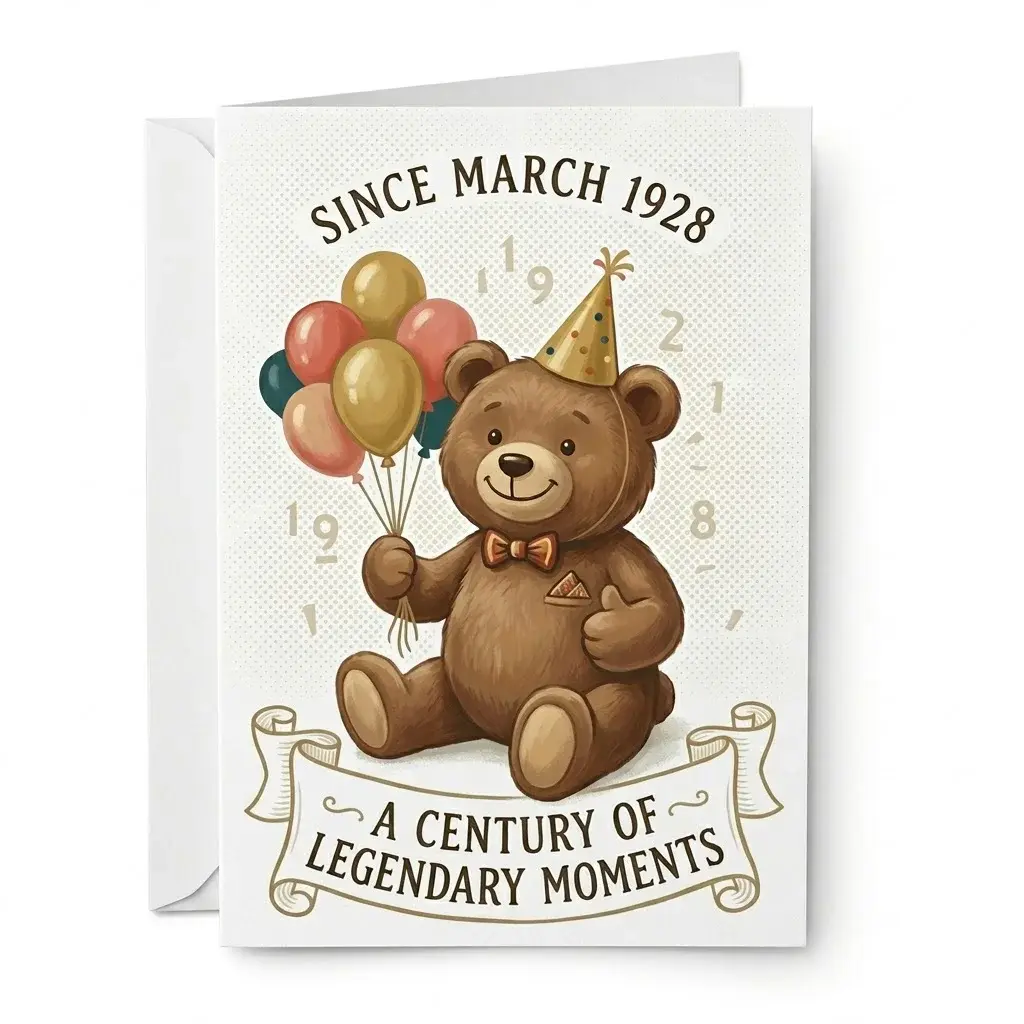
The cheapest possible signal that a card was chosen rather than grabbed.
A birth-year card works because it is specific without being personal. You do not need to know someone well to get the year right, and the year alone makes the card feel selected — which is most of what a card is doing.
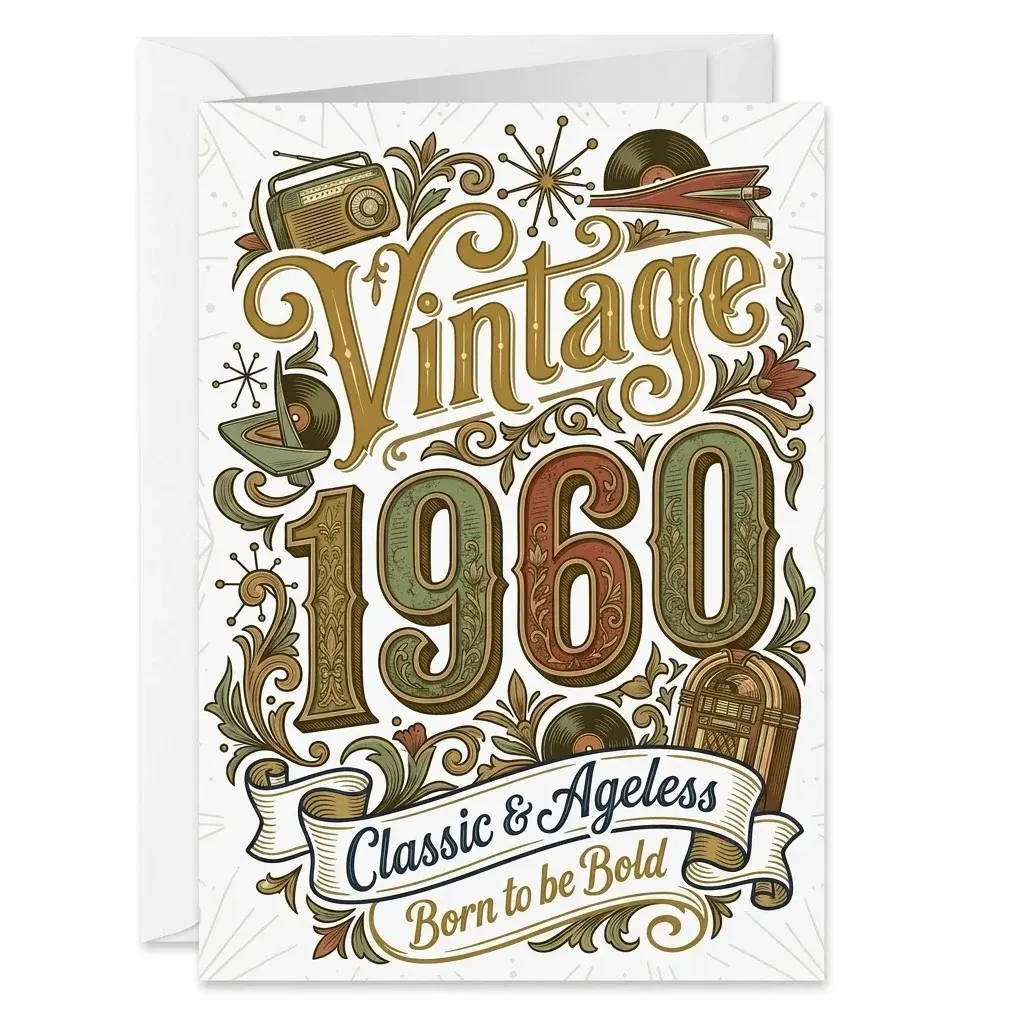
Two rules. First, use the birth year, not the age — the maths is the recipient's job and they enjoy it. Second, check the year rather than assuming: a card with the wrong year is worse than a generic one, because the mistake is now permanent and on display.
Designs referencing the 1950s through 1990s carry the strongest visual shorthand — cassettes, retro badges, sunset palettes — because those decades have an established look. Years from the 2000s onward work better with typographic treatments than with nostalgia motifs, simply because the aesthetic has not settled yet.